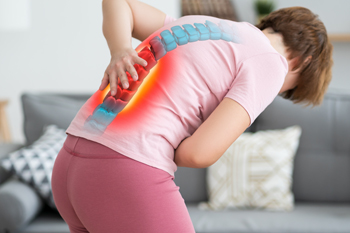
The discs between the vertebrae of the spine act as cushions, helping absorb pressure while allowing the spine to move comfortably. When a disc becomes damaged or weakened, it may begin to bulge outward or the softer inner material may push through the disc's outer layer, resulting in a herniated disc. Depending on its location, a bulging or herniated disc can irritate nearby nerves and cause pain, numbness, tingling, or weakness.
What Causes Bulging and Herniated Discs?
Spinal discs naturally become less flexible with age, making them more vulnerable to injury and degeneration. However, disc problems can also occur following an injury or develop gradually from repetitive stress placed on the spine.
Common causes and contributing factors may include:
- Age-related wear and degeneration
- Falls, auto accidents, and other injuries
- Improper lifting techniques
- Repetitive bending, lifting, or twisting
- Prolonged sitting and poor posture
- Physically demanding occupations
- Excess stress placed on the spine
- Genetic factors that increase susceptibility to disc problems
Symptoms of a Bulging or Herniated Disc
Some disc problems produce few or no symptoms, while others can cause significant discomfort when the affected disc irritates a nearby nerve. Symptoms depend largely on where the damaged disc is located.
A bulging or herniated disc in the lower back may cause back pain along with pain, numbness, tingling, or weakness that extends into the buttocks or legs. When a disc in the neck is affected, symptoms may travel into the shoulders, arms, or hands. Patients may also experience muscle weakness or difficulty performing certain movements and everyday activities.
Chiropractic Care for Bulging and Herniated Discs
Chiropractic care provides a conservative, non-surgical approach to managing symptoms associated with disc problems. Following an evaluation, your chiropractor can develop an individualized treatment plan based on the location and severity of your symptoms.
Treatment may incorporate chiropractic adjustments, stretching, therapeutic exercises, massage therapy, and acupuncture. These therapies can be used to help improve spinal mobility and function, relieve muscle tension, and manage pain while supporting your overall recovery.
Find Relief From Disc-Related Pain
Pain from a bulging or herniated disc can make sitting, walking, working, exercising, and other everyday activities difficult. If you are experiencing persistent back or neck pain, radiating discomfort, numbness, tingling, or weakness, schedule an evaluation with our chiropractic team to learn more about conservative treatment options that may help you return to more comfortable movement.
Frequently Asked Questions
What is the difference between a bulging disc and a herniated disc?
A bulging disc is one that has begun to push outward while still intact. A herniated disc is where the softer inner material has pushed through the disc's outer layer. Both can irritate nearby nerves depending on where they sit.
What causes a herniated disc?
Spinal discs naturally become less flexible with age, making them more vulnerable to injury. Disc problems can also follow an injury or build up gradually from repetitive stress. Common contributors include falls and auto accidents, improper lifting, repetitive bending or twisting, prolonged sitting and poor posture, physically demanding work, and genetic factors.
What are the symptoms of a herniated disc?
Symptoms depend on where the damaged disc is. A disc in the lower back may cause back pain along with pain, numbness, tingling or weakness extending into the buttocks or legs. A disc in the neck may send symptoms into the shoulders, arms or hands. Some disc problems cause few or no symptoms at all.
Can a herniated disc heal without surgery?
Chiropractic care offers a conservative, non-surgical approach to managing disc symptoms. After an evaluation we build a plan around the location and severity of your symptoms, which may include adjustments, stretching, therapeutic exercises, massage therapy and acupuncture.
Can a herniated disc cause back pain?
Yes. A disc in the lower back commonly causes back pain, often with pain or numbness travelling into the buttocks or legs.
